Buyer's Guides
Is Wired Ribbon Worth It?
Oct
Last updated:
Is wired ribbon worth it? Yes, when the design needs shape that holds: structured bows, loops that stand away from the bouquet, and displays in warm or humid rooms. No, when the bouquet is a simple hand tie, the stems are fine and delicate, or the budget is tight. Wired ribbon is a tool for a specific job, not an upgrade for every bouquet, and the checklist below settles the question for your design before you order.
What wired ribbon actually is
A wired ribbon has a thin, flexible wire sewn into each hemmed edge. That wire lets you bend a loop or tail into a shape and have it stay there, instead of flopping under its own weight. A standard ribbon without wire drapes and falls; a wired ribbon holds the shape you give it. The trade-off is handling: wired ribbon is stiffer, bulkier at the knot, and needs sturdier scissors to cut cleanly.
| Wired ribbon | Standard ribbon | |
|---|---|---|
| Holds a shaped bow | Yes, loops and tails stay put | No, shape relaxes over time |
| Humid or warm rooms | Keeps structure far longer | More likely to droop |
| Handling | Stiffer, bulkier knots | Softer drape, easier tying |
| Fine or delicate stems | Wire can press and mark stems | Gentler on stems |
| Cutting | Needs sturdy scissors | Standard scissors are enough |
| Re-use for decor | Often re-shaped and re-used | Usually single-use for shaping |
Why it earns its place, and where it does not
Wired ribbon earns its place through shape retention. A structured bow for a wedding or an event display must look the same at the end of the evening as it did at the start, and wire is what makes that possible, especially in humidity, where standard ribbon softens and collapses. It also lets one bouquet carry loops and tails that stand away from the flowers, which is a design effect standard ribbon cannot hold. Where it does not earn its place is simple work: a plain hand tie gains nothing from wire, fine stems can be marked by the pressure of the wire edge, and the added bulk makes small knots clumsy. Cost follows the same logic: pay for wire only where the design visibly depends on held shape.
When to choose it, and when to skip it
- Choose it for structured wedding and event bows, long displays, humid venues, and any design where loops and tails must stand away from the bouquet.
- Skip it for simple hand ties, small posies, fine-stemmed flowers, and tight budgets where standard ribbon already does the job.
- Mix deliberately when only the feature bow needs wire: use wired ribbon for the bow and standard ribbon for the stem wrap, rather than paying for wire throughout.
Where to confirm before ordering
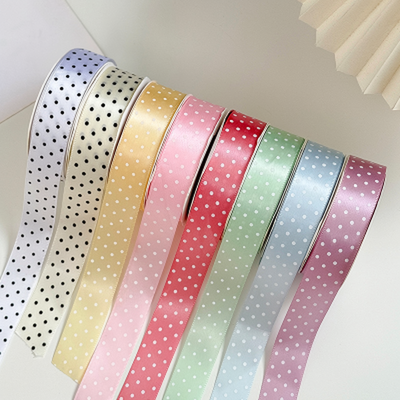
Do not assume a ribbon has a wired edge from its photo. Wholesale listings state width, length per roll and rolls per pack, and a wired edge, where present, must be confirmed on the listing itself or through your order request before you plan a design around it. Current English ribbon listings do not label a wired edge as standard, so treat it as a specification to verify, not a default. Browse the wholesale ribbon range and check each listing, or ask in your order request. If you decide your design does not need a wired edge, standard options include wholesale florist ribbon 4cm 10 yards 5 rolls and wholesale florist ribbon 2.5cm 20 yards 8 rolls. Samples are exempt from the minimum order, bulk orders start from 20 rolls, and freight is quoted per order.
How to decide, step by step
- Does the design need held shape? If the bow must keep loops and tails standing for hours, wire is worth considering. If it is a simple tie, it is not.
- Are the stems sturdy enough? Thick, woody stems tolerate a wired edge. Fine, delicate stems can be marked by it, so choose standard ribbon or protect the stems.
- Is the venue warm or humid? Humidity is the strongest case for wire, because it is where standard ribbon loses shape fastest.
- Does the budget allow it? Pay for wire only on the pieces where shape is visible, and use standard ribbon elsewhere in the same design.
- Confirm the listing and test a sample. Verify the wired edge on the listing or in your order request, then shape a sample bow and leave it for a day before committing to bulk.
Frequently Asked Questions
Can I make any ribbon wired?
No. A wired edge is built into the ribbon’s hem during manufacture. You cannot reliably add wire to a standard ribbon afterwards, and attempting it gives an uneven edge and a poor finish.
Does wired ribbon work for every bouquet?
No. It suits structured designs and sturdy stems, but it is wrong for simple hand ties, small posies and fine-stemmed flowers, where its stiffness and bulk work against the design.
Is wired ribbon reusable?
Often, for event decor. Because it holds shape, a wired bow can be reshaped and used again, which can offset its higher cost across events. For single-use bouquets, reusability does not apply.
Do I need special scissors for wired ribbon?
Sturdy scissors, at least. The wire edge dulls fine scissors quickly and can leave a ragged cut. Use a solid pair reserved for wired work, and keep fine scissors for standard ribbon.
Will wired ribbon damage delicate stems?
It can. The wire edge concentrates pressure where it grips, which can mark soft or fine stems. For delicate flowers, use standard ribbon, or cushion the stems where the wired edge sits.
How do I check a listing for a wired edge?
Read the listing details rather than judging by the photo, and if the edge is not stated, ask in your order request before ordering. Never plan a structured design around a wired edge you have not confirmed.
