Wrapping Tutorials
How to Pack a Bouquet Water Bag for Local Delivery
Last updated:
Keep tested bags identifiable during batch packing
Do the leak check before adding decorative paper, then keep checked bouquets on a separate dry tray. Identify the bag reference, source pack and closure used on the order sheet. Do not mix unused bags from another pack into the checked group without a new trial.
- If a checked bouquet is reopened or its fill or closure changes, wipe the outside dry and repeat the check.
- If moisture appears during loading, hold that bouquet and inspect the bag and carrier separately.
- Record whether the replacement came from the same pack and whether the same defect reappeared.
Use these observations to describe the issue to the supplier. This workflow does not establish a universal sampling rate or certify the rest of a pack as leak-free.
A bouquet water bag keeps the cut ends in contact with water during an upright local delivery. Test the complete bouquet, closure and carrier together before using a new bag size for customer orders.
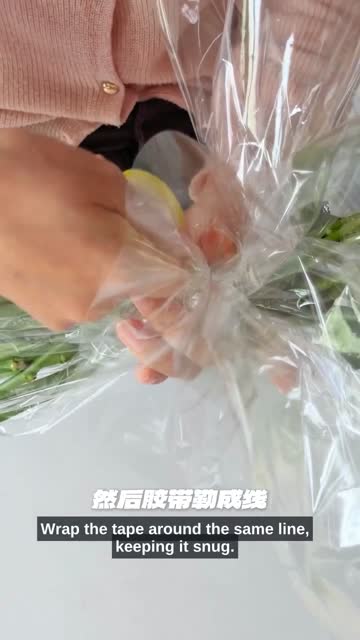
Watch the bouquet water bag demonstration
Isolate where the test bag leaks
Start with a clean, dry carrier. After preparing a sample bag as shown, place separate dry paper strips by the body seam and below the stem closure. Lift the bouquet upright, set it down and inspect each strip separately. If both are wet, dry and repeat before diagnosing the source.
For a wet seam, set that bag aside and test a fresh one from the same pack. For moisture starting at the closure, adjust one part of the closure and repeat with the same fill. Keep the reference and the result with your delivery notes.
What to prepare
- A bag intended for wet stem ends and the closure specified for that bag.
- A representative bouquet, a tray and a dry sheet of tissue to reveal leaks.
- The paper wrap and upright carrier you plan to use for delivery.
Fit, close and test the water bag
- Measure the stem bundle at the point where the bag will close. Compare that measurement with the opening and try the bag on the actual bouquet.
- Follow the supplier’s fill instructions. Seat the cut ends without forcing stems against the seam. Check for sharp stem ends before closing.
- Close the bag as specified and wipe the outside dry. Stand the bouquet on tissue over a tray. Check for dampness around the bottom seam and closure before adding decorative paper.
- Fit the bouquet in its upright carrier. Reproduce the handling it will face during loading and handover. Inspect the tissue again and check that the bouquet still stands securely.
Read the tissue before changing the wrap
| Observation | What to check |
|---|---|
| Wet tissue under the bag | Inspect the seam and check whether a stem has punctured the bag. |
| Moisture near the tie | Check fill level and the closure against supplier instructions. |
| Dry bag but shifting bouquet | Improve carrier support and test the loaded bouquet again. |
| Droplets higher in the sleeve | Check the source separately using the flower sleeve condensation guide. |
What to confirm before ordering bags in bulk
Record the bag reference, opening width, closure type, stems used and test result. Ask the supplier for the intended use, pack count and ordering unit. Compare the usable bags in each pack and keep one approved sample for the next delivery. Request a wholesale quote with your bouquet dimensions and delivery destination.
Can a bouquet water bag be carried sideways?
Use the orientation specified by the supplier. Treat a successful upright trial as evidence for that setup and test other orientations separately if the supplier permits them.
Can I use any clear sleeve for the water?
Choose a bag specified for wet stem ends. Check its seam and closure with your own bouquet before relying on it for a delivery.