Buyer's Guides
Satin vs Organza vs Grosgrain: Which Ribbon for Which Bouquet
Oct
Last updated:
Satin, organza and grosgrain are the three ribbon weaves florists meet most often, and they behave very differently in a bouquet. Satin is smooth and formal, organza is sheer and airy, and grosgrain is ribbed and grippy. The short answer: choose satin for formal work, organza for lightness, and grosgrain when the ribbon must hold its shape and stay put. The table below makes the differences concrete, and the checklist at the end shows how to confirm what you are actually buying, because a listing’s width, length and pack size matter as much as the weave name.
What the three weaves are
| Weave | Sheen | Stiffness and body | Drape | Edge behaviour | Best bouquet fit |
|---|---|---|---|---|---|
| Satin | High sheen, smooth face | Soft to medium body | Flows and falls cleanly | Cut ends need care; many listings note fray-resistant edges | Formal handheld bouquets, weddings, presentation bows |
| Organza | Sheer, light-catching | Light body, little structure | Floats and layers well | Very light edges; handle gently | Airy everyday bouquets, accents over a base ribbon |
| Grosgrain | Matte, ribbed texture | Firm body, holds shape | Stands away from the stems | Ribbed weave resists slipping | Structured bows, event decor, bouquets that must keep their shape |
One caution on names: satin, organza and grosgrain describe the weave, not the fibre. Two ribbons can both be called satin and still feel different, because the fibre and finish underneath the weave differ. Always confirm the finish and specification on the listing itself rather than assuming it from the weave name alone.
Why each weave suits different work
Satin reads as formal because its smooth face catches light evenly, which is why it dominates wedding and presentation work. Organza reads as light because it is sheer: it adds volume without weight, and it layers well over a base ribbon. Grosgrain reads as practical because its ribbed surface grips: bows stay where they are put, loops keep their shape, and the ribbon is less likely to slide on smooth stems. Layering is a legitimate technique here: a wide satin base with a narrow organza or grosgrain accent gives a bouquet both presence and detail, without forcing one ribbon to do two jobs.
When to choose which
- Wedding handheld bouquet: satin for the main wrap and bow, where formality and photographs matter most.
- Funeral wreath or tribute: satin or grosgrain, depending on whether the design needs drape or a firm, long-lasting bow.
- Everyday retail bouquet: organza as an accent, or satin in a standard width, where speed of wrapping and a fresh look matter more than structure.
- Event decor and long displays: grosgrain where bows must hold their shape for hours, especially in warm or humid rooms.
Where to find them
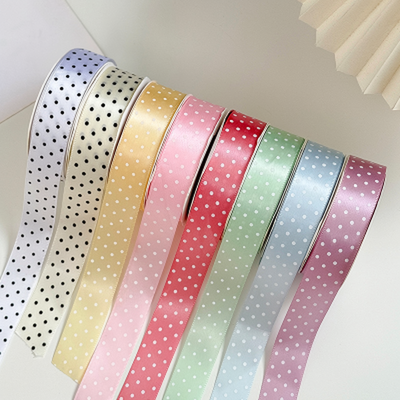
The wholesale ribbon range lists satin, organza and printed styles, sold by the roll with volume discounts. Listings state width, length per roll and rolls per pack, so confirm the finish, width and pack size on the product page before calculating quantities. If your design specifically calls for grosgrain, confirm its availability on the listing or through your order request before planning around it, rather than assuming every ribbon weave is stocked in every width. Examples from the range include wholesale florist ribbon 3cm 15 yards 5 rolls, wholesale florist ribbon 4cm 15 yards 5 rolls and wholesale florist ribbon 2.5cm 30 yards 8 rolls. Samples are exempt from the minimum order, and bulk orders start from 20 rolls, with freight quoted per order.
How to verify a ribbon before ordering in bulk
- Confirm the finish on the listing. Read the product page, not just the photo: weave, width, length and pack size are the facts you are ordering.
- Match the width to the bouquet. Narrow widths suit accents, standard widths suit handheld bouquets, and wide widths suit statement bows.
- Convert length into packs. Work out total yardage, divide by yards per roll, then by rolls per pack, and check whether the listing is in yards or metres first.
- Test a sample. Check sheen, stiffness, drape and the cut edge in daylight, and confirm the colour matches across rolls before committing to bulk.
Frequently Asked Questions
Is satin the same as silk?
No. Satin is a weave, not a fibre. A satin ribbon can be made from different fibres, and the fibre affects hand, weight and care. Check the listing for the fibre and finish rather than assuming silk from the word satin.
Can organza carry a heavy bouquet on its own?
Not well. Organza is sheer and light, so it works best as an accent or a layer over a base ribbon. For a heavy bouquet that needs structure, pair it with a firmer ribbon or choose satin or grosgrain for the main wrap.
Is grosgrain waterproof?
No. Grosgrain is a weave, and water resistance depends on the fibre and any finish applied, not on the ribbed texture. Do not assume a grosgrain ribbon will resist water unless the listing says so.
Can I layer two ribbons in one bouquet?
Yes, and it is common practice: a wide base ribbon for presence with a narrow accent ribbon for detail. Keep the widths clearly different, or the layering looks accidental rather than deliberate.
Should ribbon match the wrapping paper exactly?
Coordinate, do not clone. Ribbon and paper should sit in the same colour family and formality level, but an exact match is unnecessary and often looks flat. A slight contrast usually reads better.
Will the colour on screen match the roll?
Not reliably. Screens shift colour, and dye batches vary. Order a sample first for colour-critical work, and judge it in daylight before placing a bulk order.
